Archive for the ‘Cookbooks’ Category

Cream of Beet and Other Traveler’s Tales


Thursday, May 29th, 2008

It’s ok if you think I’m a bit crazy. Everyone else around me does too, because I’ve been excited– even to the point of giddy– about making up a batch of ice cream inspired by a recent trip to Il Laboratorio del Gelato. No one would begrudge me the ice cream part, certainly. It’s the kind of ice cream. Beet ice cream. See, there’s that look. Why would I go and ruin perfectly good cream and sugar with something as well, dirty-tasting, as beet? Maybe I am a bit nuts.

But then again, consider. Beet sugar is a highly used sugar in all kinds of sweets. And, even unrefined, I think it’s hard to go wrong with a salad of roasted sliced beets and juicy sweet mandarin oranges. I’ve also done wacky things to great effect with beets before. Is it that much of a stretch to go to ice cream?

Anyway, let’s back up a bit. Il Laboratorio del Gelato is in New York. Not Seattle. So how did that happen? Last weekend, we wrapped up the last vestiges of my birthday (which was back in April) with a trip to NYC for some eating, shopping, and well, more eating. We stayed in the lower eastside, at the Hotel on Rivington, which shoots up through blocks of vintage walk-ups and shops like bolted arugala. The entry way is a sculpted birth canal, which leads to a sleek, modern interior to match the shiny steely blue exterior. Rooms are minimalistic with crazy views if you get one of the upper rooms. Our room had a peak-a-boo view of the Manhattan bridge and a not-so peak-a-boo view of apartments, including from our shower.

 Mg 0040-27 Mg 0049-36
 Mg 0046-33 Mg 0050-37 Mg 0043-30

The hotel is right across from a place called Economy Candy. It’s like candyland meets one of those old hardware stores. Shelves floor to ceiling with candy piled everywhere. Old classics like pop rocks and candy cigarettes. Fancy new chocolates. 3 feet long Twizzlers. Mints and gum and candy coated ants. I may be joking about that last one, but I’m really not sure. The smell from all the candy was pretty overwhelming, and the line was pretty long… so we moved on.

 Mg 0056-43 Mg 0057-44

Since we arrived on Friday early evening, we kept it pretty simple. Dinner at Lupa, one of our favorites, with hand-made pasta followed by a couple of fantastic desserts… the tartufo (a huge chocolate covered ice cream ball with espresso poured over the top) for him and a black pepper panna cotta with rhubarb for me. It’s not the panna cotta everyone would want, but it was fantastic… strong black pepper with perfect creamy finish.

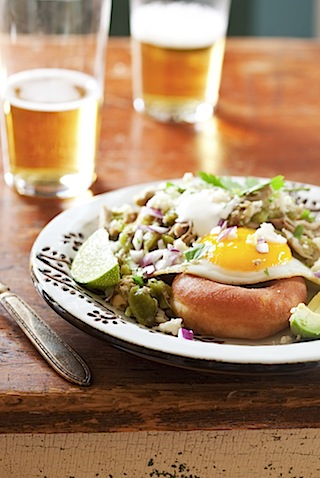
We spent the better part of Saturday in Williamsburg, Brooklyn wandering our way down Bedford after a fantastic brunch at Bonita of huevos (with bacon!) for me and chiliquiles for Cam. We were on vacation, so sangria at 11 seemed like a good idea.

 Mg 0015-2 Mg 0017-4
 Mg 0018-5
 Mg 0024-11 Mg 0029-16

Then it was wandering the streets and people watching and enjoying the spring weather, until beer-o-clock.

 Mg 0032-19
 Mg 0034-21 Mg 0039-26

Saturday night, after a trip back to the Lower East Side wtih beers and yummy herby popcorn down the block from the hotel at Spitzer’s Corner, we hopped back over the bridge to dinner in Williamsburg where we really loved the casual vibe. We were supposed to eat at Sweetwater that night, but based on a last minute recommendation, we stopped into Aurora, a packed Italian bistro tucked a few blocks away, and ate at the bar. I had one of the best raviolios I’ve ever had… fresh buffalo mozzerella, fava beans covered with razor thin slices of summer truffles. Cam’s wild boar ragu was good, but not quite as appealing to him as the Amatraciana at Lupa the night before.

The next day, after a bit of a lie-in, we got up and walked down the street to Katz’s deli, another of our regular stops when we visit NYC. It’s touristy and completely chaotic, but you can’t argue that their sandwiches are amazing. After lunch, there was more shopping in Soho. It was a gorgeous day of a holiday weekend, so the crowds were insane, but we managed to find a few side streets to wander that were a bit less crazy with some fascinating shops like Shoe which sells beautiful handmade shoes by Cydwoq (sidewalk) and relaxed and had an espresso at Gimme coffee on Mott St.

 Mg 0059-46 Mg 0066-53 Mg 0060-47
 Mg 0074-61 Mg 0071-58

For dinner, we decided to just wander around to see what we saw. We thought about trying to get a table at WD-50 which was right around the corner from the hotel, but ended up popping into Tapeo 29 for some yummy tapas. I highly recommend the boquerones. The bistec was wonderfully flavorful, but a bit tough. After noshing there for a bit, Cam decided he was still hungry… so of all things, we headed back to Lupa for a little pasta and salad dessert.

The real dessert had come earlier in the day with the stop at Il Laboratorio del Gelato. I’ve written about this place before, but it’s still as good as ever. And, this time, I got a bit more adveturesome in my flavors. I couldn’t resist a taster spoon of the beet gelato. I wasn’t sure what to expect, whether the beet would be subtle almost unidentifiable or not. Turns out, it’s not. It’s fresh and vibrant and packed with earthy beet flavor. I was intrigued, but not ready for a whole bowlful, so I got the olive oil gelato instead. But I almost immediately told Cam that I’d be making some beet ice cream when I got home. I wanted to play with this flavor… the cold beet was good, but I thought it really could use more flavors to fill it out. I started throwing out flavor combinations as we walked around… beet and chocolate chip, beet and cardamom, Meyer lemon beet. I would not be daunted by eye-rolls.

 Mg 0063-50 Mg 0061-48

I was a bit daunted though at figuring out how to start. There were sadly no beet ice cream recipes in David’s Perfect Scoop. I thought for sure he’d have done it already. And the only reference I found online was to an article about Il Laboratorio del Gelato. I’d be winging it.

 Mg 0086-6-2 Mg 0101-21-1 Mg 0093-13-1

I headed to the market to get my beets, picking up a bunch of golden and a bunch of red. The golden beet flavor I had already figured out… I wanted it to be bright and fresh with orange and honey. For the red beets, I knew I’d be playing with flavors. I dotted a plate with little blobs of beet puree like a painters palette and started tasting. Most of the flavors worked… beet and vanilla was lovely, as was beet and cardamom and beet and cinnamon. Beet and anise, however, was terrible. Finally, I decided on cinnamon with a hint of citrus.

As my beets roasted, I searched through Perfect Scoop to find the closest thing I could… a sweet potato ice cream that I’m also dying to try. The recipe is simple… basically adding the cream to the puree and seasoning, and then freezing. No eggs to bother with, and a bit more control of adding ingredients a bit at a time to find the right balance of sweet to bright to creamy and trying to keep the beet flavor intact, but not quite so aggressive.

One thing to know is that as flavors get cold, they change. Sweet isn’t quite so sweet when frozen. My golden beets started out less sweet than their red cousins, and the beet flavor really shines through kicking the orange and honey out the door. It starts great and has a certain charm, but it is definitely not for everyone.

The crimson beet ice cream with cinnamon and lemon zest is almost otherworldly. The cinnamon jumps up and bites you in the nose as you open the tub. The color is startlingly fuscia. As the cream starts to melt in your mouth, the beet perks up and announces a big hello and how do you do. The earthy flavor lingers (maybe asking for a bit more sugar and lemon zest), but in a pleasant, “well, how about that” kind of way. Even still, it’s not for every palate and even adventuresome mouths may only want small portions.

20080529 2888-260120080529 2895-2608

Beet Ice Cream
(a very rough recipe… you’ll need to adjust based on the flavors of your beets. Just consider this a rough guideline).

Peel and chop the beets, and roast at 375F with a splash of olive oil for an hour or two until the beets are nice and soft. Puree the beets in a blender with a bit of liquid (orange juice works well… but red wine or port would be a nice touch with the red beets too) until very smooth, and then push through a fine sieve. You should end up with quite smooth puree that either looks a lot like ketchup or mustard, depending on your beet color. I was very tempted to forgo the whole ice cream project and just turn them into beet ketchups and mustards!

20080528 2876-258920080529 2892-2605

You’ll end up with a lot of left over pulp. I saved mine and plan on making some beet-stuffed raviolis with it. Three large beets yielded about 1 cup of beet puree for me, with about the same amount of leftover pulp. That turned into enough ice cream for small servings for 4 people.

Let the beet puree cool to room temperature. Add your spices (cinnamon and zest from 1 lemon in my case for the red, the zest of two oranges and a splash of vanilla for my golden) and a healthy pinch of salt. Mix in honey or simple syrup until it seems a bit sweeter than you think it should be. Then, add your cream, a little at a time, stirring to incorporate. Taste it as you go along and adjust your sweetener accordingly. I used about 2 to 1 cream to sweetner ratio, and my ice cream was not too sweet. Then load the mixture up into your ice cream maker. Freeze overnight.

20080529 2881-259420080529 2885-2598

Let the ice cream sit at room temp for about 10 minutes or so before trying to serve it. I don’t know if I got lucky or it has something to do with the texture of the beets, but not only the color of the ice cream was gorgeous, it also scooped like a dream.


Zhatar’s Herby Deliciousness


Wednesday, April 16th, 2008

A few weeks ago, I picked up a little book that I have come to adore, A Handful Of Herbs. It’s tiny and really only has a handful of recipes and gardening tips… but the recipes are good, the tips are fun, and the photos, of course, are gorgeous. I have come to love to leaf through its mere 120 some-odd pages. The first recipe that caught my eye was one for something called zhatar. It is a Persian spice mixture that I had never heard of that mixes thyme with sesame seeds and salt to make a dry rub that is often sprinkled on hard boiled eggs. It sounded intriguing, and I made a little note to myself to come back an try it. Imagine my surprise when a project that I am working on for a client (the thing that has kept me so busy, I haven’t had a chance to blog) included a recipe that included zhatar!

The recipe for zhatar (sometimes zaatar, sometimes za’atar) seems to vary by region, but usually includes the combination of thyme and sesame with ground sumac. The dish that I was preparing for my client also introduced ground pistachios into the mix. Yum! It may not be traditional, but I highly recommend it. I also like throwing some red chile flakes into the mix for a little kick.

20080416 2348-206120080416 2342-2055
20080416 2343-205620080416 2334-2047

You can use the zhatar on eggs, like I did with these poached eggs over hashed fingerling potatoes. But, it’s also fantastic on yogurt with a little lemon and olive oil mixed in, or sprinkled on top of hummus.

By the way, I received a fantastic treat in the mail today! The first issue of Edible Seattle. This is a magazine that I’d be excited about regardless, but it is all the more fun because it is packed with my photos (including the cover shot!) and an article I wrote last fall on Maria Hines of Tilth. The magazine should start showing up on shelves soon!

200804161833In The Kitchen Maria Hines0078

Lara’s Zhatar
I’m foregoing spoon measurements here… just add the ingredients in about equal parts.

1 part pistachios
1 part thyme leaves, fresh or dried
1 part turkish oregano (optional)
1 part sesame seeds
1 part red chile flakes (optional)
salt to taste

Grind the pistachios in a spice grinder until you have course crumbs. Mix with the remaining ingredients. Sprinkle on stuff.

This mixture should keep for at least 1 week in a sealed plastic bag.

Muffin Mixed Berries


Saturday, April 5th, 2008

These are muffins that don’t want to be blogged about. I’ve made them now six or seven times, each batch very much destined for the blog. But this or that got in the way… I’d run out of time before scooping them up into a bag and heading out of town, or they’d simply all disappear by the time I got around to snapping a few shots. Finally, I managed to get some nice photos of the last batch I made a few weeks ago… only to draw a blank when I sat down to write about them. I was quite tempted to simply post the recipe and the photos and say nothing, I was getting so frustrated, but then I ate one of the little fruity buggers and got my revenge.

20080324 1271-982Udon-000005
20080324 1281-99220080324 1288-999

The thing is, it’s hardly fair to call these mixed berry muffins “muffins“. They are really more fruit than crumb, which is just the glue to hold all the juicy berry goodness together. I think they really should be called muffin mixed berries. And they were the first recipe I made from Seasonal Kitchen by Michele Cranston, a book I’ve really grown to adore. The beauty is that they are even seasonal in winter (in fact, that’s the section they appear in the book) because they use frozen berries. I’ve started keeping a huge bag of mixed frozen berries in the freezer, and whenever I need a quick idea for breakfast or a road trip, these muffins have become the answer. The only thing I don’t love about the recipe is the oil… it calls for vegetable oil and I think that’s just missing an opportunity for adding flavor. Instead, I’ve started using coconut oil which adds just the teaniest tiniest hint of coconut… not enough that coconut-haters will notice, but enough to give them a little something-something.

Now, quickly, before something comes up again and I don’t finish this post, here is the recipe:

20080324 1277-988

Mixed Berry Muffins
adapted from Michele Cranston’s Seasonal Kitchen
Makes 12 muffins

1 cup (250g) plain yogurt
3.5 fl oz (100 ml) coconut oil
2 eggs
2 t vanilla extract
2 1/4 c (280g) all purpose flour
2 t baking powder
3/4 c brown sugar
1 3/4 c (250g) frozen mixed berries
raw sugar for sprinkling

Preheat the oven to 350F. If you keep your coconut oil cold, then you’ll want to melt it before you begin, and let it cool to room temperature. Line a muffin tin with paper, or grease it and set aside.

Whisk the yogurt, oil and eggs until smooth, then mix in the vanilla.

In a separate, large bowl, sift together the flour and baking powder. Stir in the brown sugar. Then, get your berries. First, pick out 12 of the larger berries to stick on the top of each muffin, and set those aside. Next, if you have really big strawberries in your mix, you might want to cut them in half. Sometimes I do this, and sometimes I don’t… but they will shrink away from the batter when cooking and create strawberry flavored holes. Now, stir the berries into the flour sugar mixture until each berry is well coated.

Fold in the yogurt mixture, and stir until there are no significant bits of dry flour. The batter will be quite dry, more like scone mixture.

Spoon the batter into the muffin tin, dividing evenly between each hole. You can fill these all the way to the top… they will rise some, but not excessively. Top each with one of the berries you picked out, and then sprinkle with the raw sugar if you want to.

Bake for 25 to 35 minutes or until the tops are nicely golden and a skewer inserted comes out clean.

Sustainable Yellowtail: A Beautiful Thing


Friday, March 21st, 2008

One of the best parts of my job is that I tend to get a lot of free food. Even food that I winds up on the set is still edible when I’m done. Oh, I wouldn’t go feeding it to guests or anything… afterall, it is usually cold and always has been poked and prodded by my fingers. But, it’s also made from the highest quality of ingredients I can find, and is (almost) always, delicious.

Most of the time, this free food is simply left over from a shoot that I’m doing. Sometimes, it’s sent to me by companies that are looking for feedback, really excited about sharing their product with someone who thinks a lot about food, or someone who is simply looking for extra press. I certainly understand that there are some bloggers out there who prefer not to accept free stuff… but I’m not one of them. When I get free stuff, I never promise to write about it on this blog. It takes something pretty special, in fact, to make it on here. And, sometimes, I still don’t even get around to it. But, sometimes, like today, I do.

Today, I want to share with you a fish that I am really excited about. When I got mail from Hannah asking if I’d be interested in trying some Kona Kampachi from Kona Blue, I was intrigued. I’m a huge fan of sushi, and will always have a hard time turning away from sashimi-grade yellowtail. But, what really struck me is that Kona Blue is a company trying new methods of fish farming that attempt to solve some of the problems of related to traditional “aquaculture.” In-shore fish farm can create serious pollution problems, releasing waste and excess nutrients into water at rates that can’t be cleaned up by natural processes. Those farmed fish also tend to suffer from mercury poisoning. Kona Blue is fishing in large sea-cages sunk into deep water far off shore, so the fish can basically school as they would in the wild and the pollution problems can be avoided. And, at the same time, the natural fish population is not being depleted. The fish also boast a 30 percent fat content, high levels of omega-3 fatty acids, and no detectable mercury.

I think it’s really early to tell whether these new fish farming practices are a good thing or if they introduce problems of their own. But, I applaud companies for trying to solve some of these problems in a responsible way. Plus, I can tell you this, the fish is beautiful.

Konakomapchi-9Konakomapchi-10

My package arrived well packed in ice, but not frozen, so the two, large fillets were immediately ready to use. The fillets are thick and fatty… perfect for a nice lunch of sashimi, with a ton still left over.

Konakomapchi-2Konakomapchi-4
Konakomapchi-7Konakomapchi-5

In fact I’ve been playing with a variety of preparations… the fish is so fresh, it’s almost a crime to cook it… but in addition to a sashimi miso salad, some simple nigiri sushi, I also lightly seared a good chunk and served it with a butternut squash mash and a fresh lemon dressing. Yum. I still have a whole fillet left that will have to be put to use quite soon. In the meantime, I thought I’d share a few shots and recipes with you.

If you want to try to find some of this fish on your own, you can order it from their website… but shipping is quite expensive. If you are in Seattle, Uwajimaya sometimes has it in stock and several area restaurants, like Canlis and Oceanaire have it on their menu. Or you can check out Kona Blue’s extensive “where to find” list.

PS: Thanks to Matt for correcting my initial mis-statement that Yellowtail is Tuna. In fact, it is its very own fish. All these years of ordering hamachi, and I always thought I was eating tuna!!!

Konakomapchi-6

Seared Yellowtail in Lemon Dressing
From Arabesque by Claudia Roden

I went searching through about 15 different cookbooks to find this super simple seared tuna recipe. Most of the other recipes I found piled on enough seasonings that the flavor of the fish would be lost. This yellowtail was far to lovely to cover up. What loved about the Arabesque recipe was how delicate the dressing is… it brightens and enriches the flavors already in the fish. I substituted hazelnut oil in the dressing, which I thought brought even a new dimension to the flavor. The original recipe also recommended pairing the seared fish with mashed potatoes, but I had some left over roasted butternut squash that I smashed up with a little OJ and a little cream which went beautifully with the citrus sauce on the fish. A little mache salad on the side brings a little more springtime to the plate.

1 lemon
2 T hazelnut oil
salt & pepper
1 thinly chopped green onion (or fresh chives)
2 T olive oil
1 thick-cut fillet of sashimi grade yellowtail (or tuna)

Zest and juice the lemon into a small bowl. Add the hazelnut oil, green onion and freshly cracked pepper. Set aside.

Heat the olive oil in a pan on high heat. Just before the smoking point, add the fish. Sear for only 1 minute on each side. Remove from heat. Slice into thin slices and sprinkle with sea salt flakes. Pour the dressing over the top to serve.

Konakomapchi-1

Yellowtail Sashimi in Miso Dressing
From Harumi’s Japanese Home Cooking

Here’s another lovely recipe from Harumi’s Japanese Home Cooking. This is so simple, but does require the best fish you can find, with a good amount of fat on it. The fat helps give a wonderful silky mouthfeel, not to mention a richer taste. You’ll need a few ingredients that you’ll probably have to go to an Asian market to get. Red miso paste and mirin can be hard to find in some supermarkets.

1/3 lb sashimi-quality yellowtail (or tuna)
3 T red miso paste
1 1/2 T casters (super-fine) sugar
1/2 T mirin
1 t rice vinegar
1/8 t dry mustard
1 1/2 c chopped green onion or chives
1 T finely grated ginger

Mix together the miso, suar, mirin, vinegar and mustard, until smooth and the sugar has dissolved.

Cut the fish into little cubes, about 1/2 to 1 inch each, and place in a medium sized bowl. Start adding the dressing a little at a time, stirring gently, until each piece is nicely coated. You may not need to use all the dressing… and I think it is best not to add too much dressing or you won’t taste the fish.

To serve, place in individual bowls, and top each with the green onion and a little dollop of freshly grated ginger.

Upside Down and Topsy Turvy


Wednesday, March 19th, 2008

It was supposed to be a good day today. April is looking to be jam packed, but here at the edge of winter, today was supposed to be a quiet one. I had nothing to do but whatever I wanted. How often does that happen?

Then, I got some really crap news and everything went all topsy turvy. Stuff that I’m hoping, like the weather that has just rolled in after a lovely blue sky morning, will simply blow over after a good night sleep. Stuff I’m hoping that I’ll never really be at a point that I’ll have to tell you about it. Stuff that I’ve at least for a little while pushed aside and to bake these lovely little raspberry upside down tea-cakes that I saw in my latest Donna Hay acquisition, Off The Shelf: Cooking From the Pantry. I really kind of bought the book for this recipe. It’s one of those things you look at and say, now, why didn’t I think of that?!? This book is simply full of recipes like that… quick, delicious things you can make from stuff you probably have on hand in the pantry or in the freezer.

20080319 1184-89520080319 1197-908
20080319 1201-91220080319 1212-923

Anyway, so I made these cakes to take my mind off the crap news. And, then, I got to eat the yummy tea cakes to take my mind off the crap news. And then, I had to go and spin for 2 hours to work off the crazy crap news cakes. So, here I am. Still pretty topsy turvy. But, at least I still have some upside down cakes to keep me company.

20080319 1213-924

Raspberry Upside Down Cakes
Makes about 20 small cakes

8oz unsalted butter
1 c caster sugar
1 t vanilla extract
3 eggs
2 c flour
2 1/2 t baking powder
about 10oz frozen or fresh raspberries

Preheat the oven to 325F.

I used silicone cupcakes cups for this so I didn’t need to grease the cups, but if you are using a metal pan, you should. Or, you could line them each with parchment.

Cream the butter and sugar until smooth and pale yellow. Then, beat in the eggs and vanilla until smooth. Sift the flour and baking soda together and then fold into the batter. The batter will get fairly thick.

Line the bottom of each cup with a layer of whole raspberries (don’t defrost the frozen ones… just put them in the cups frozen). Then, top with batter, filling to the top of the cups.

Bake for 20-25 minutes or until the cakes puff up and turn a light golden brown. Cool them on a rack in the cups for about 5 minutes, then remove from the cups and invert to serve.

Almost Spring Spice Crepes


Tuesday, February 26th, 2008

Spice Crepes-15

Recently, I was flipping through the The Northwest Best Places Cookbook, and one of the first recipes that caught my eye was for Gingerbread Crepes. I’m not really sure why it got me so excited… I’m not a big gingerbread fan… but the idea stuck in my head, and I knew with a little tweaking, these crepes would be something I would love. To me, these crepes are like a warm blanket on a cool spring morning… comforting, but light and fresh. If you’ve been intimidated by crepes before, give these a try… they are much easier than you think.

To begin with, I made added Amaranth Flour to the mix. Amaranth flour has a great nutty flavor that you might associate with graham crackers and tends to add crispness to whatever you bake with it, meaning that your crepes are less likely to get soggy while you cook up the whole batch. Amaranth is also much more nutritious than all purpose flour containing a nearly complete protein. Because Amaranth doesn’t contain gluten, you will need to mix it with other flours to achieve the desired texture. I’m not gluten free, so I chose regular all purpose flour… but there are other flours you could mix with that could yield beautiful results.

The sweetener for this recipe is malt syrup which is something like a cross between honey and molasses. It’s lush and golden and pairs beautifully with the spice combination of ginger, cinnamon and cardamom. A little grated citrus peel (preferably fresh, but dry is okay too) brightens up the whole batter.

For the filling, you can use fresh apple slices but applesauce is delicious and much easier. A bit of Meyer lemon adds a lovely sweet tartness and keeps the apples from being cloying. I love these served with a dusting of powdered sugar and a bit of lemon served on the side which also helps bring out the citrus in both the crepes and the filling.

Spice Crepes-24

Spice Crepes with Meyer Lemon Applesauce

If you can’t find Meyer Lemons, use the juice of half a lemon and half of an orange.

3/4 c all-purpose flour
1/4 c amaranth flour
2 T sugar
1 t powdered ginger
1 t cinnamon
1 t cardamom
1 t grated orange or lemon peel
1 1/3 c milk
2 eggs
1/4 c barley malt syrup
1 T butter, melted

2 c applesauce
1 t cinnamon
1 t nutmeg
1 meyer lemon, juiced

In a large bowl, whisk together the flours, sugar and spices. In a separate bowl, whisk together the milk, eggs, malt syrup and butter. Stir the egg mixture into the dry ingredients until the batter is smooth.

Melt 2 t of butter in a flat, round, non-stick skillet over medium-high heat. Add a scoop of the batter to the pan and give it a tilt to thinly coats the bottom of the pan. When the edges start to brown after 1 to 2 minutes, carefully flip the crepe with a wide spatula, and cook for another minute. Slide the crepe onto a plate, and repeat with another scoop of batter adding a little more butter if needed. Use a bit of parchment between the crepes to prevent them from sticking together. Cover with a towel to keep the crepes from drying out.

Heat the applesauce in a high-sided pot on medium heat. Add the lemon juice, cinnamon and nutmeg. When just warm, you are ready to start filling your crepes.

Take a single crepe, and add the applesauce. I like to do it just off center. Then, I roll, starting from the small side, all the way over. Sprinkle with a bit of powdered sugar, and serve with a slice of Meyer lemon.

Technorati Tags: ,

My Sweet Vegan


Tuesday, February 5th, 2008

I don’t really do cookbook reviews on this site. But, when I received a very personal email from the publisher of My Sweet Vegan asking me if I’d take a look, I found I couldn’t refuse. While I am nothing close to being a vegan– I even rendered 10 lbs of pork back fat into lard yesterday –I was still intrigued by the story of the author. At 18, and just a senior in high school, blogger Hannah Kaminsky wrote and photographed the cookbook and managed to get herself published. At 20 years her senior, I certainly haven’t even come close to such an accomplishment! I definitely wanted to check out the book, so I said send it along.

My first impression of the book, with its cheerful bright cover with colors reminiscent of gummy bears was that this is a book I’m going to like. Two big, chocolate rich dessert photos grace the cover and struck me with their honesty. This is real food made to be eaten, not merely to be looked at. It’s not all polish and gloss, but it is plenty welcoming… like the friendly, personal nature of food blogs in book form. The same feel is captured throughout the book with photos that may not be perfect, but look enticing all the same, and little personal tidbits about each recipe.

Flipping through the recipes, I see several I’d like to try… a dried fruit focaccia for one and party mix bars, a clever twist of rice crispy treats and Chex® mix. I skip over the recipes with substitute ingredients like vegan “cream cheese” or soy creamer. I’m sure the recipes are good, but just like the idea of lard creeps some people out, faux dairy is not my thing.

20080203 0268-27220080203 0278-282

I finally settle on trying the coconut fudge, which smartly substitutes coconut milk for the cream. I made one more substitution, and replaced the margarine with coconut oil… keeping to the vegan intent of the recipe but also avoiding margarine which I’m not much of a fan of. The resulting fudge was exceptionally rich, super sweet, and with just a subtle hint of coconut… if it weren’t for the generous topping of flaked coconut on top, it would be hard to put your finger on the flavor.

20080203 0287-29120080203 0271-275
20080203 0281-28520080203 0286-290

Two of these dense little squares was about all I could handle over the span of a day, so I recommend making a batch and making up some little packages as gifts for your coconut and chocolate loving friends.

20080203 0290-294-1

Coconut Fudge
Adapted from Hannah Kaminsky’s My Sweet Vegan

Makes 32 Small Pieces

1 c semi-sweet chocolate, coarsely chopped (or chocolate chips)
3 1/2 c powdered sugar
1/2 c dutch process cocoa powder
2 T coconut oil
1/2 c coconut milk
1/2 t vanilla extract
1 c unsweetened, toasted, flaked coconut

Line a baking pan with at least 1 inch sides with parchment, leaving the parchment to extend a bit up the sides. It might help to put a smear of coconut oil on the bottom of the pan to help the parchment stick.

Mix the chocolate, sugar and cocoa together in a large bowl. Set aside.

Mix the coconut oil and coconut milk together in a small sauce pan over medium heat. Stir and heat until the oil has melted and bubbles just start to form. Remove it from the stove and immediately pour the hot coconut over the chocolate mixture.

Let it sit for about a minute, and then stir well to melt the chocolate completely. If it seems that it has cooled too much, try putting the dish over a bowl of hot water and stirring constantly until you have a nice smooth mixture. Add the vanilla, stir, and then pour the fudgy goodness into the parchment lined baking pan, pressing it into the corners and smoothing out the top. Toss the coconut flakes all over the top and press them into the fudge just a little so they will stay. Let the fudge cool completely before cutting it. I covered mine once it was room temp, and tossed it in the fridge to firm it up even more.

Technorati Tags: , , , ,

Tasty Veggie Dips


Friday, February 1st, 2008

It’s not like you really need another dip recipe. Not only are there old standbys, but there are some really gorgeous looking alternatives out there this week. So these two recipes, variations on a couple of heavenly looking dips in Marie Claire Seasonal Kitchen, are really overkill. But, they are so good, I hope you try them anyway.

Edibles Renee-10520080201 0248-252
20080201 0255-259

First off, I give you carrot dip. Now, I was lucky enough to make mine from carrots that were pulled from the ground yesterday. Can you imagine? In January, you can still harvest carrots. And these were true beauties. Big, thick brilliantly orange sticks that smelled like earth and sunshine. Just washing off the caked mud was enough to make me swoon. And, when I saw the beet dip recipe, with its deep scarlet color, I knew that I could get gorgeous results with carrots instead. A bit of reduced blood orange juice (you can use any oranges or even meyer lemons if you want) makes the dip all the more vibrant, both in flavor and color.

20080130 0151-15220080201 0253-257

I smeared my dip on little polenta-garbanzo bean flour blinis, which I adapted from a recipe that I shot for this Epicurious article last fall (the panna cotta recipe is lovely by the way). But, this dip would work equally well with pita, crackers, celery or a nice crusty french loaf.

20080201 0262-26620080201 0259-263

I hadn’t actually meant to make two dips, but sitting right next to Seasonal Kitchen’s beet dip recipe was an Italian white bean dip that I couldn’t resist. My version replaces the white beans with black eyed peas, adds a bit of meyer lemon and leaves out the tuna for a veg friendly dip. A drizzle of truffle oil or a good salad-quality oil and a sprinkle of basil easily pushes this dip into the favorite category and a nice change from the usual. Again, crackers or crusty Italian bread would be lovely, but I just made some little toast triangles from bread I had at home.

20080201 0263-267
Carrot Dip
Makes one good sized bowl full.

3 large carrots
4 cardamom pods
1 bay leaf
1 blood orange
1 t sugar
4 T plain yogurt
salt and pepper to taste

Preheat the oven to 400F (200C).

Peel the carrots and slice into 1 inch chunks. Place them in a baking dish and fill about 1/2 way up with water. Add the cardamom pods and bay leaf. Cover with foil, and bake for about an hour or until the carrots are very soft. Remove the carrots from the baking dish and let them cool.

Mix the juice from the orange with the sugar in a small sauce pan and heat over medium-high until the liquid reduces by about half. Let cool.

In a food processor, blend the carrots until they are smooth, adding a bit of the reduced orange juice if it gets to thick. Transfer the carrot puree to a bowl and add the yogurt and remaining reduced orange juice. Stir to just combine. Season to taste with sea salt and black pepper.


Polenta-Garbanzo Bean Blinis
Makes 25-30

1/4 cup garbanzo bean (chick pea) flour
1/4 cup polenta corn meal
1/8 t baking powder
1 t salt
1 egg, lightly beaten
1/4 cup yogurt
1/4 cup skim milk

In a medium sized bowl, mix together the garbanzo bean flour, polenta, baking powder and salt. Add the egg and stir to combine until all the flour is moistened. Add the yogurt and milk. Let the mixture sit for 15 minutes.

Heat a griddle to medium heat and lightly brush with olive oil. Drop small spoonfuls (a bit smaller than 2 inches across) of batter onto the griddle. Let them cook until you start to see small bubbles bursting throughout and the edges just start to pull away. If the griddle is to hot the blini’s will rise more in the middle and get a bit weird looking so reduce the heat. You don’t want them to rise too quickly. Flip and cook on the other side for about the same amount of time. Let them cool on a baking sheet (it’s best not to stack them when they are hot).

20080201 0261-265
Meyer Lemon and Black Eyed Pea Dip
Makes one good sized bowl full.

Note: You need to start this recipe the night before you want to serve it, or use canned black eyed peas.

1 cup dried black eyed peas
1/2 cup vegetable stock
2 T olive oil
1 Meyer lemon
1/4 cup fresh basil leaves, julienned
salt and pepper to taste
oil for drizzling

Place the dried peas in a bowl and cover with water. Let sit over night.

Drain and rinse the peas and place in a heavy bottom sauce pan. Add the vegetable stock, cover and cook on low for about 1 hour until the peas are quite soft and have lost any of the mealy texture. Remove from the heat and let them cool.

Put the softened peas into a food processor with the olive oil, and juice from the lemon. Blend just a little until the oil has been incorporated and the peas have broken down a little. Don’t blend too much though, you don’t want a paste.

Place the puree in a bowl and stir in the basil leaves. Salt and pepper to taste. Drizzle with your choice of oils.

Savory Cream Scones with Cheese and Bacon


Saturday, January 26th, 2008

I’m not sure what this says about us, but we received large packages of bacon this year from not one, but two different people. I mean big packages of bacon. Our freezer is brimming with bacon. Thick cut, apple wood smoked; peppered; Canadian-style. Come on over, and have some bacon… we have plenty to share!

Not that I’m complaining. I mean, what doesn’t go better with a bit of bacon in it? We quickly nibbled up two packages crisply grilled. Yum.

Brunch Picnic-3-1Brunch Picnic-2-1

Yesterday, I pulled out the Macrina Bakery sweet scone recipe and made a couple of changes to make a savory version of cheesy bacon scones. These scones, with their generous heaping of whipped cream, bake up extremely light. But don’t let their innocent looks fool you… they are energy (ie, calorie) power houses. Bacon, cream and cheese all in one. They are little triangles of indulgence and a perfect way to work on that beer gut or heart attack you’ve been looking for. Or maybe a good reason to go shopping for some new, less constrictive clothing. Oh, the joys of eternal optimism.

Brunch Picnic-8-1

Bacon and Cheese Cream Scones
(adapted from the Macrina Bakery Cookbook, p 62)
Makes 10 to 12 scones

4-6 slices of bacon
1 cup sharp white cheddar, grated
1/2 c parmesan-reggiano, grated
3 1/2 cups all-purpose flour
2 T sugar
2 T baking powder (yes, Tablespoons!)
1 t salt
2 1/2 c heavy cream
1 egg

Preheat oven to 350F. Line a baking sheet with parchment.

Fry up your bacon until it is quite crisp. Drain on a paper towel lined plate, and set aside.

Combine the two cheeses in a bowl and toss with a fork to get them well mixed.

Sift the flour, sugar, baking powder and salt together in a medium to large bowl. Crumble the now cooled bacon into the flour mixture and stir to coat. Add the cheese, and mix well.

Beat the cream with a whisk or mixer until you get medium soft peaks. Fold half of the cream into the flour mixture, mixing carefully. Try to get all of the flour off the bottom of the bowl. Then, mix in the other half of the whipped cream and fold in very gently. You don’t want to over mix the dough.

Lightly flour a work surface, and carefully pour the mixture out onto the surface. The dough will probably still be a bit wet, with dry bits of flour here and there. Flour your hands, and carefully shape the dough into a 1 inch thick rectangle. Then, fold the dough in half over itself and flip it over. It should start to become somewhat moldable. If it seems too wet still, sprinkle a touch of flour on the top and shape and fold again. However, don’t do this too many times or you’ll kill the advantage of whipping your cream first. Once it will basically hold together, form a 3×16 rectangle about an inch or so thick. Cut the rectangle into triangles (about 10 to 12).

Lift scones and place onto the parchment very close together. They should almost be touching, but not quite… maybe 1/4 or 1/8 of an inch between. This will help them keep their shape.

Make a quick egg wash of a beaten egg and about 1 t of water. Then, lightly brush the scones with the mixture. A tiny bit of smoked salt sprinkled on top would be a nice addition at this point.

Bake for 25 minutes or until golden brown. Scones should cool for about 10 minutes on a wire rack.

Udon with no Shoes On


Friday, January 18th, 2008

Before the holidays, I was browsing in the bookstore that is attached to Uwajamiya, one of Seattle’s large Asian food grocery stores. I was there to find some manga as a present for my daughter, but of course, immediately got sucked into the cookbook section, completely tempted by book after book that I had never seen before. Never mind that they were written in kanji, so I had no hope of reading any of them…. the photos were enough to keep me mesmerized until realizing the time, I had to rush on over to get the books I was supposed to be buying.

Afterward, one set of books stuck with me… those by Harumi Kurihara. The Japanese versions of these books are graphically gorgeous, light, airy and elegant. I knew I’d have to find the English version. Luckily, there are two… not quite in the same light style, but still beautifully published. Last week, I picked up Harumi’s Japanese Home Cooking and flipping through I knew I had a winner of a book. Many of my favorite Japanese dishes… tonkatsu, gyoza, tomago are beautifully illustrated. Finding the recipe for homemade udon noodles, however, was the real kicker.

Udon2002Udon2004
Udon2006Udon2016

Even better, these noodles are about the most fun thing to make (not to mention incredibly simple). I thought I’d be able to use my new toy… the pasta attachment for my Kitchen Aid…but as it turns out, these slippery, thick noodles really don’t require anything other than a bit of arm strength and some time. In fact, I highly recommend against using the dough hook attachment on the Kitchen Aid for the initial kneading… I gave it a try, and found that it couldn’t get the dough to form into a ball well enough when my hands could. Once the dough was in a ball, it was far too heavy and stiff for the mixer to knead it properly. That said, it’s also too hard to knead it with your hands at that point… so Harumi has a wonderful solution. Use your whole body… by wrapping the dough in a plastic and then a towel, you walk all over it to help work the gluten in the dough. Brilliant! It’s so much fun. If you have kids, you must give this a try. Or, even if you don’t.

Udon-000007Udon-000033
Udon-000034Udon-000024

I found the noodles this recipe makes to be more on the rustic side… more like handshaven noodles than packaged udon. That’s part of what makes them good… but if you prefer a more even, refined noodle, and you have a pasta maker, try using the roller to press out the dough before hand cutting the noodles.

Udon2014


Udon

1 cup lukewarm water
5 t salt
3 1/2 c bread flour
1 1/2 c all-purpose flour

Dissolve the salt in about 1 T of the water, then add the rest of the water. Set aside.

In a very large bowl that you’ll be able to knead the dough in, combine the two flours with a fork. Make a little well in the center, and add the salted water. Use the fork to pull a little bit of flour into the liquid, and then start to use your hands to work the moistened flour into the rest of the flour. Depending on the moisture content of your flour, you might need to add a bit more water… as the dough comes together, it should form into a lumpy ball. If it stays as too ragged, sprinkle a bit more water on and work it in.

Start seriously kneading the dough as hard as you can for about 10 minutes, on a board dusted with bread flour. If the dough is too sticky, knead in a touch more of the bread flour. To knead, fold over from the top, and use the heal of your palm to press it flat again. Turn the dough 45 degrees and repeat.

Now comes the fun part. Wrap the dough in a heavy duty plastic bag. I like to use left over produce bags.. but they are thin so I double wrapped to be safe. Then, wrap the the plastic bag in a largish kitchen towel. Set it on the ground and stand on it. Move around, do a little dance, hop up and down, take a stroll. Your whole body weight on the dough will work it like your hands never could. This helps make the noodles good and chewy. After a few minutes, take the dough out of the bags… it will be pretty flat, but with a rolling pin, roll out any irregularities. Then give it a fold, put it back in the bag, wrap it in the towel and walk on it some more. Repeat this process about 4 times. Then, leaving the dough in the bag, let it rest for 3 hours in a warm place.

After it’s had a chance to rest, take the dough out and form it into a ball. Place it back in the bag & towel and walk on it one more time… this time making a point to try to spread the dough as much as possible. The thinner you can get it by walking on it, the easier the rest of the process will be.

Take the dough out from the bag again, and roll it out on a floured surface until it is a square about 1/8 inch thick. The dough may be pretty stiff and springy, so this may be a bit challenging. If you can’t seem to get it thin enough with a rolling pin or if you want a more refined udon, cut it into 4 pieces and run it through the thickest setting of a pasta machine, and give them a good dusting of flour.

Next, fold the dough from the top to the center and then from the center to the bottom (like an accordian). Then, with one of the long edges facing you, slice off the dough in 1/8 inch pieces. Dust the sliced pieces with a bit more flour as you go to prevent them from sticking.

Boil the noodles immediately, or cover with a towel while you are waiting for the water to come to a boil. The noodles will need to boil for about 7 minutes, stirred with a chopstick to prevent them form sticking together.

Traditionally, the noodles are served hot, with a dashi-based stock. But, they are also delicious stir fried with a splash of sesame oil, oyster sauce, soy, sesame seeds and some veggies or meat of your choice.